How to compare home battery quotes in Ontario
Last updated By The SolarPanelFinder Rooftop Desk
Why two quotes for the same battery look nothing alike
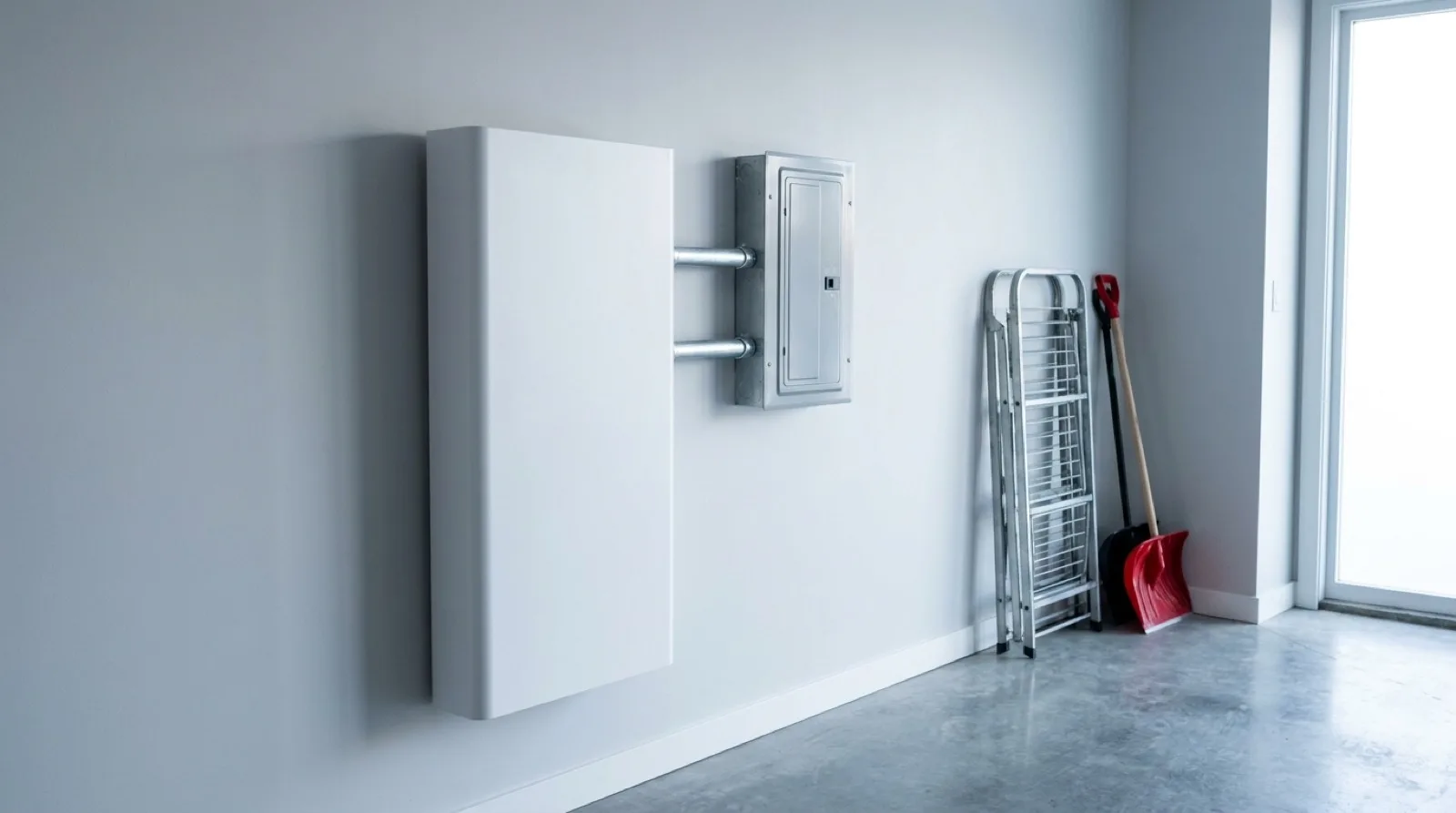
Battery pricing is the least settled number in Ontario solar, and the spread is not noise. It is a difference in what the quote contains.
For a single product, the Tesla Powerwall 3, Solar X Canada quotes $19,000 to $24,000 fully installed in Ontario, Xolar quotes $13,000 to $17,000 before HST as an add-on to a solar installation, and SolarCalculatorHQ's national figure is $13,500 to $16,500 fitted. Taken together those three sources put the honest GTA range at roughly $13,000 to $24,000 for the same box on the same wall.
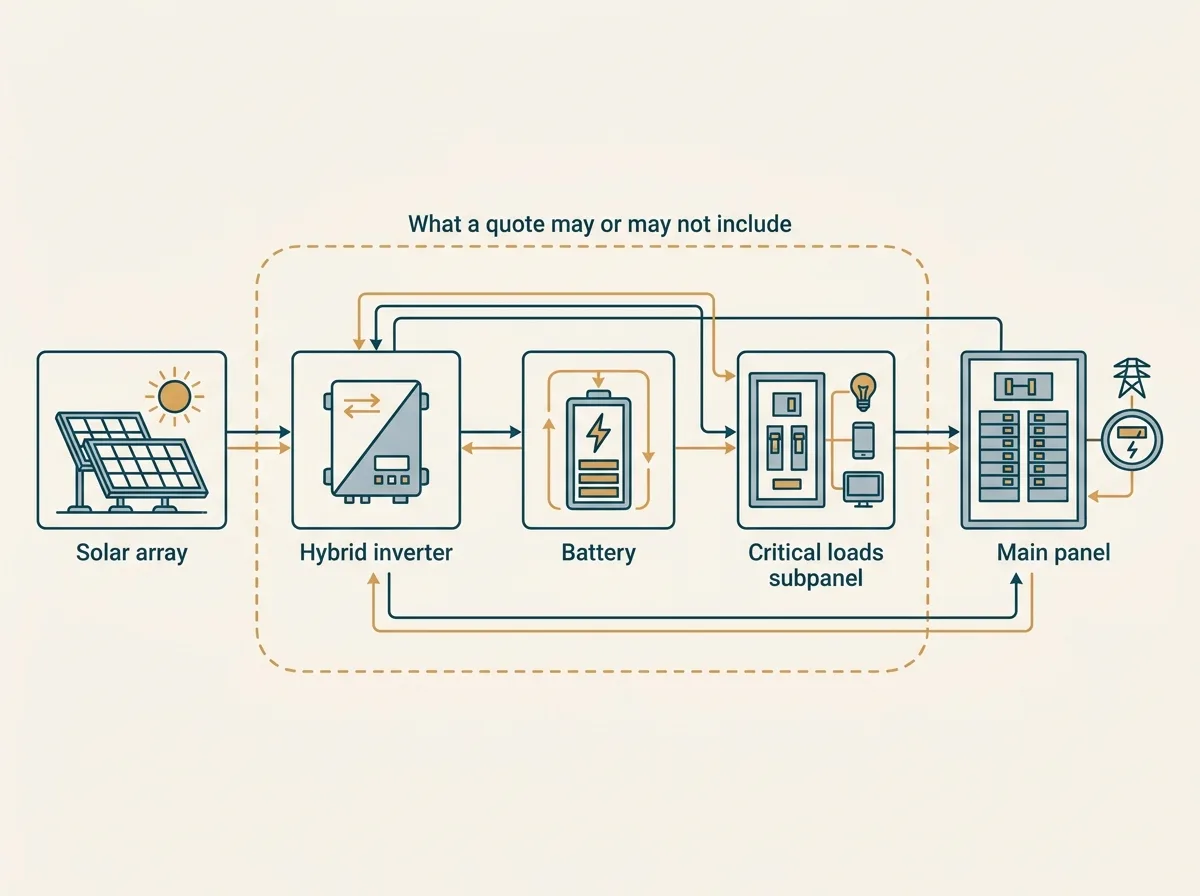
Most of that gap is what the number includes. An add-on price assumes a crew is already on site wiring an array, so mobilisation, permit work and the inverter are carried by the solar job. A standalone retrofit into a house that already has power pays for all of it again.
The rest of the gap is the electrical scope around the battery. Backing up the whole house is different work from backing up a handful of circuits, and a critical-loads subpanel is a separate line item that is not always inside a headline figure.
Compare per kWh of usable capacity, not per unit
There is one figure that makes quotes for different products readable against each other, and it is price per kilowatt hour of usable capacity.
Green Building Canada puts installed Canadian battery cost at $700 to $2,000 per kWh. That band is wide, but it is a band you can test a quote against. At the bottom of Green Building Canada's band a 13.5 kWh unit would be about $9,450 and at the top about $27,000, which brackets every whole-unit figure we found. A $24,000 quote on 13.5 kWh sits at the very top of that Green Building Canada band and is worth asking about rather than accepting.
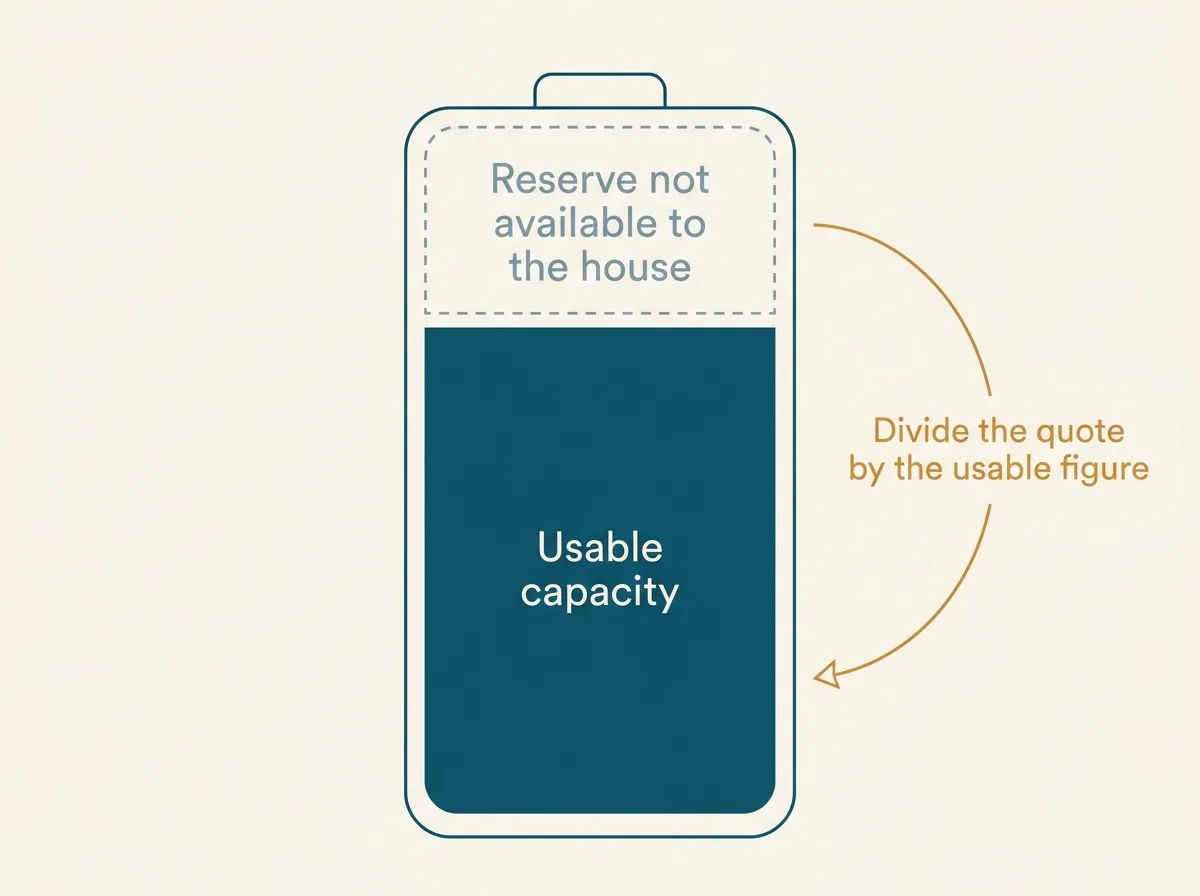
Usable capacity is the operative phrase. Solar Guide's Canada-wide figure for a typical 10 kWh unit is $7,000 to $20,000, a three-fold spread on identical nominal capacity, and chemistry, usable versus nameplate capacity, continuous output rating and whether a backup subpanel is included all sit inside that range. A nameplate number on a brochure is not what the house gets to use.
Ask for nameplate and usable capacity in writing, on every quote, and do the division yourself. It takes a minute and it converts three incomparable proposals into three numbers on the same scale.
Modular storage changes the arithmetic
A single large unit has to be bought whole. A modular system does not, and in Ontario that difference shows up directly in the entry price.
Solar X Canada lists the Growatt APX HV at $8,000 to $14,000 installed for 5 to 30 kWh depending on capacity, and the Enphase IQ Battery 5P at $8,500 to $11,200 per 5 kWh module, against $19,000 to $24,000 for a single 13.5 kWh Powerwall 3 installed in Ontario. SolarCalculatorHQ puts a Generac PWRcell at $11,500 to $15,000 fitted.
Modular design also lets a household size for the circuits it actually wants backed up now and add capacity later, rather than guessing at the whole-home figure on day one. Solar X Canada puts installed home battery storage in Ontario at $8,500 to $24,000 overall, with the common mid-market band at $13,000 to $22,000, so a modular start sits near the bottom of the real market rather than outside it.
Inverter architecture is part of the same decision. Xolar quotes a Solis hybrid inverter plus Renon battery as a $9,500 to $11,000 package before HST rather than pricing a battery on its own, because on some systems the inverter has to change for storage to work at all. A quote that lists a battery with no inverter line is a quote worth asking a question about.
One practical consequence is that the entry decision and the capacity decision come apart. With a single unit, a household commits to the whole capacity and the whole price on the day the contract is signed, and any error in estimating which circuits matter is paid for in full. With modules, the same household can back up a furnace, a fridge and a few lighting circuits first, live with the result through one Ontario winter, and add capacity from evidence rather than from a spreadsheet. Neither approach is wrong, but only one of them lets the house correct a guess.
Fit the battery to the solar job, not after it
The single largest lever on a battery price is timing, and it is available only once.
Xolar prices a Powerwall 3 as a $13,000 to $17,000 add-on before HST when a crew is already wiring an array, against Solar X Canada's $19,000 to $24,000 for an Ontario installation on its own. The difference is a second mobilisation, a second set of permit work and inverter work that would otherwise have been done once.
Whole-project figures follow the same logic. Solar X Canada prices 8 kW of solar plus a Powerwall 3 at $35,900 to $45,100 before incentives, and Xolar puts solar plus battery on 5 to 12 kW systems at $30,000 to $46,300 before HST. Set against Xolar's $19,400 to $28,000 for an 8 kW array on its own, adding storage roughly doubles a residential solar project.
That is a real decision rather than an upsell, and it is easier to make before the array is installed than two years afterwards. Our solar battery storage cost guide carries every one of these figures with its source, and the solar battery calculator starts from the loads you want covered rather than from a product.
What a battery does and does not do to your bill
A battery changes when you buy electricity. It does not change how the credit for exported electricity is worked out.
The Ontario Energy Board describes net metering as a billing arrangement in which generation beyond your own use flows to the grid and returns as a credit against the electricity you use, and states that credits carry forward for at most 12 months before dropping to $0. Adding storage does not alter either half of that. SurgePV notes that all of Ontario's roughly 60 local distribution companies are required to offer net metering, and that exported power is credited against your bill rather than paid out to you.
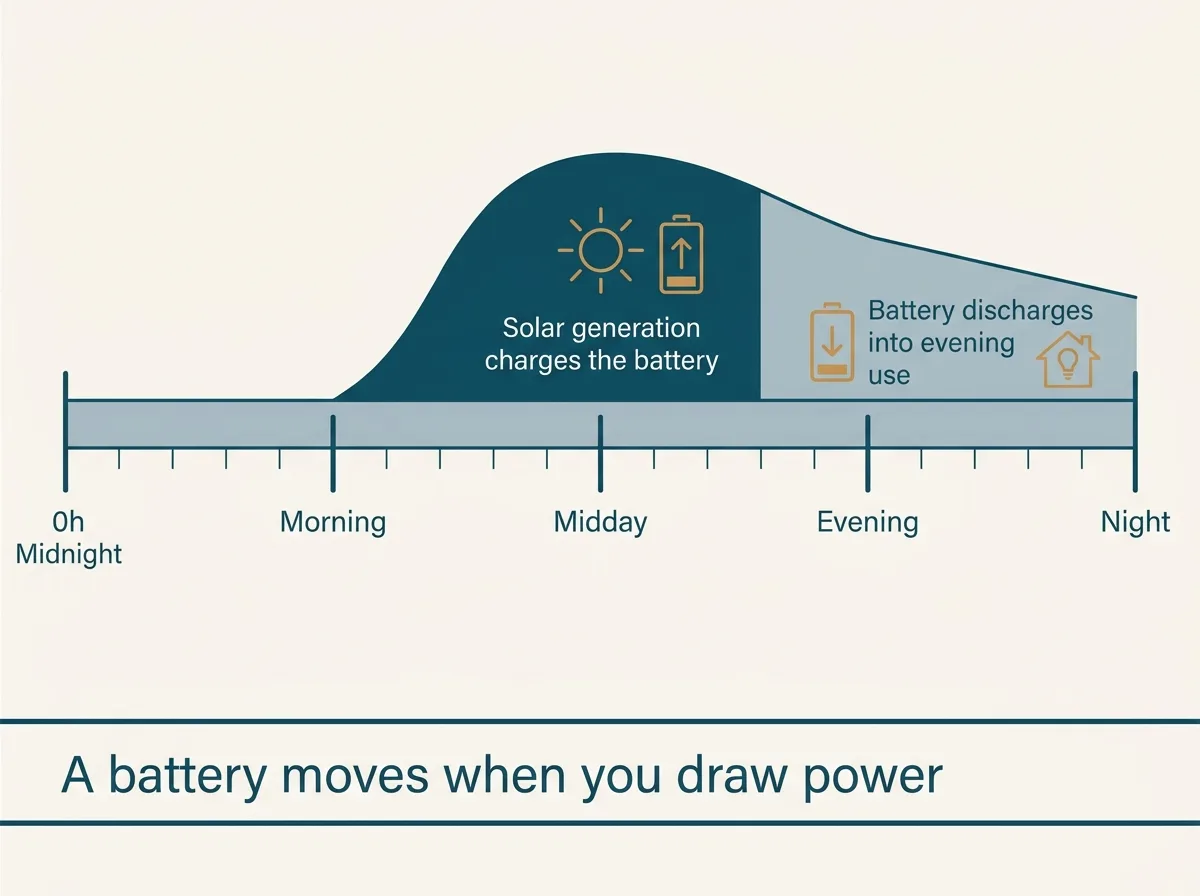
What a battery does is shift your own consumption to different hours and keep the house running during an outage. Both are real, and neither is a payment. Any proposal describing storage as a way to increase what the grid returns to you is describing a mechanism the regulation does not contain.
Backup capability depends on the wiring as much as on the battery. Whole-home backup needs panel work sized for it, and a critical-loads subpanel is separate electrical scope. What Ontario net metering actually pays you covers the credit itself, and who does the electrical work on a solar install covers the panel side.
The permit side is small but real
Battery work is electrical work, so it goes through the same body as the rest of the wiring.
SurgePV states that every installation connected to the electrical system in Ontario needs an ESA permit filed as a Notification of Work by a licensed Electrical Contractor before work begins, and the Electrical Safety Authority puts the minimum residential notification fee at $88. SurgePV notes that ESA wiring and licensing fees rose 1.9 percent effective 1 April 2026.
Tax is the larger line of the two. Ontario HST is 13 percent, and several installer price lists are quoted before it. Xolar states its battery add-on figures of $13,000 to $17,000 are before HST, which is about $1,690 to $2,210 of tax on that line by itself. On a $20,000 battery the tax is $2,600, which is larger than the difference between many competing quotes.
Confirm which side of the tax line every number sits on before comparing two proposals. It is the fastest way to discover that the cheaper quote was the more expensive one.
Who in the GTA lists this work
Sixteen of the 161 companies in this index list solar battery storage, against 143 listing panel installation. The pool of firms quoting storage in the GTA is roughly a tenth the size of the pool quoting panels.
That matters practically. Gathering three battery quotes takes longer than gathering three panel quotes, and a homeowner who wants storage is better off raising it during the solar conversation than starting a separate search afterwards. The solar battery storage category page shows the sixteen.
This index does not know which products any company installs, which certifications it holds, or how many storage systems it has commissioned. It records what a company's own listing supports and nothing further, and our methodology page says so in terms. The questions that separate one storage installer from another are about usable capacity, inverter architecture and what is inside the price, and every one of them is answered by asking rather than by reading a directory.
Frequently asked questions
How much does a home battery cost in Ontario?
- Solar X Canada puts installed home battery storage in Ontario at $8,500 to $24,000 depending on product and capacity, with a common mid-market band of $13,000 to $22,000. Measured by capacity rather than by unit, Green Building Canada puts installed Canadian battery cost at $700 to $2,000 per kWh, which is the fairest basis for comparing quotes on differently sized systems.
Why do quotes for the same battery differ so much?
- Because they contain different work. For a Powerwall 3, Solar X Canada quotes $19,000 to $24,000 fully installed in Ontario while Xolar quotes $13,000 to $17,000 before HST as an add-on to a solar install. An add-on assumes the crew, the permit work and the inverter work are already being paid for by the solar job. A standalone retrofit pays for all of it again.
Is it cheaper to add storage during the solar install?
- Yes, on the figures we could source. Xolar prices a Powerwall 3 as a $13,000 to $17,000 add-on before HST when a crew is already wiring the array, against $19,000 to $24,000 for a standalone Ontario installation according to Solar X Canada. Doing it later means paying twice for mobilisation, permit work and inverter work.
Can I start small and add capacity later?
- With a modular system, yes. Solar X Canada lists the Growatt APX HV at $8,000 to $14,000 installed across 5 to 30 kWh and Enphase IQ Battery 5P modules at $8,500 to $11,200 per 5 kWh, so a household can size for the circuits it wants backed up now and expand. A single 13.5 kWh unit has to be bought whole.
Does a battery increase what net metering returns?
- No. The Ontario Energy Board describes net metering as a credit against the electricity you use, carried forward for at most 12 months before dropping to $0, and storage does not change that calculation. A battery shifts when a household draws power and keeps it running during an outage, which is why Green Building Canada prices capacity at $700 to $2,000 per kWh rather than by what it might return.