Who does the electrical work on a solar install
Last updated By The SolarPanelFinder Rooftop Desk
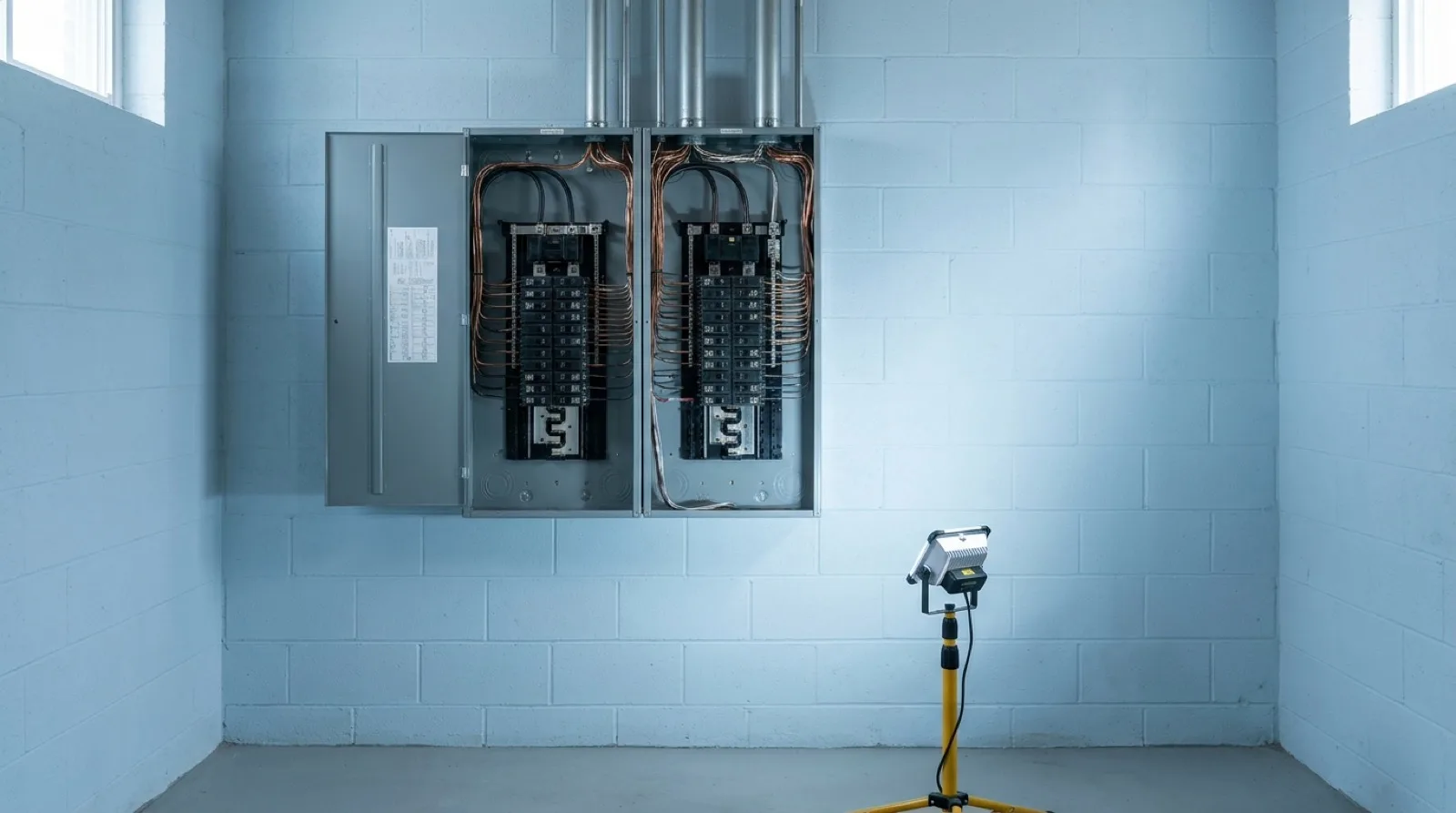
The array is the visible half of the job
A solar installation is roofing work joined to electrical work, and the electrical half is where most quotes differ from each other.
The panels, the racking and the labour to get them onto the roof are broadly comparable between proposals. What is not comparable is what happens at the other end of the wire: whether the existing service can carry the array, whether the meter base can carry the service, and how many circuits have to be added, moved or replaced to make the whole thing legal.
None of that is visible from the street or from a satellite image, which is why an early quote priced from an aerial photograph is a starting figure rather than a price. What a Toronto solar quote usually leaves out covers the shape of that gap in general. This article is about the electrical side of it specifically.
The service panel, which is the first question
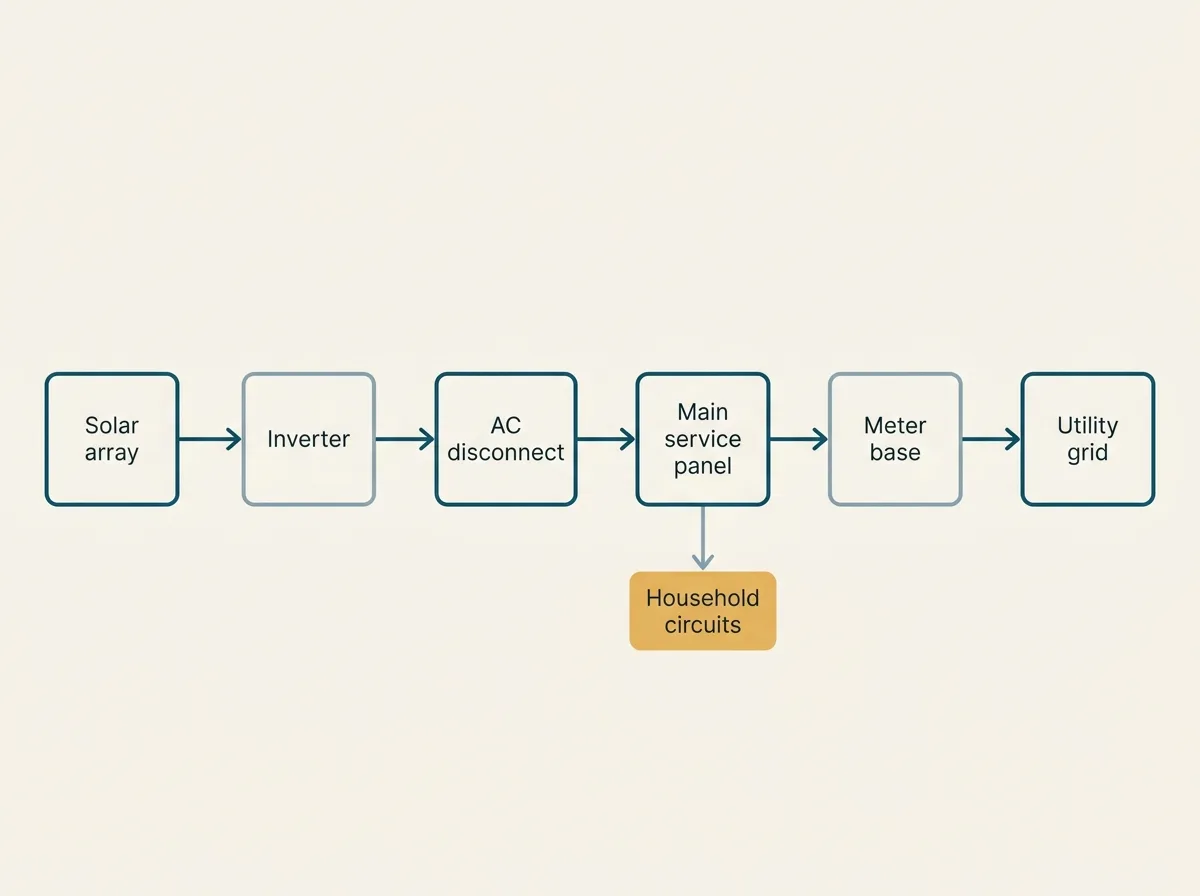
The question an electrician answers before the array is designed is whether the existing service can carry it. Where it can, the work may be limited to strengthening the service entrance. Where it cannot, the panel itself has to change.
SolarCalculatorHQ puts a service entrance upgrade so the panel can carry a solar array at $1,800 to $4,000. That is the smaller of the two outcomes. The larger one is a full panel upgrade: City Power Electrical Services puts a Toronto 200 amp upgrade at $3,200 to $4,500 with the ESA permit included, and Superior Power Electric puts a 100 amp to 200 amp upgrade across Ontario at $2,800 to $5,000 on the same basis. Two sources on the same work, so the honest band across City Power Electrical Services and Superior Power Electric is $2,800 to $5,000.
A few adjacent jobs sit around it. Superior Power Electric prices a panel replacement at the same amperage at $1,800 to $3,000, a fuse box to breaker panel conversion at $2,200 to $3,800, a sub-panel at $900 to $1,800, an additional dedicated circuit at $200 to $450, and moving a panel to a new location at $500 to $1,200.
Where the existing service has spare capacity and the constraint is simply circuit positions, Superior Power Electric's sub-panel at $900 to $1,800 can settle the problem for a fraction of a full upgrade. That is a question worth asking directly rather than accepting the larger scope by default.
The meter base, the surprise inside the surprise
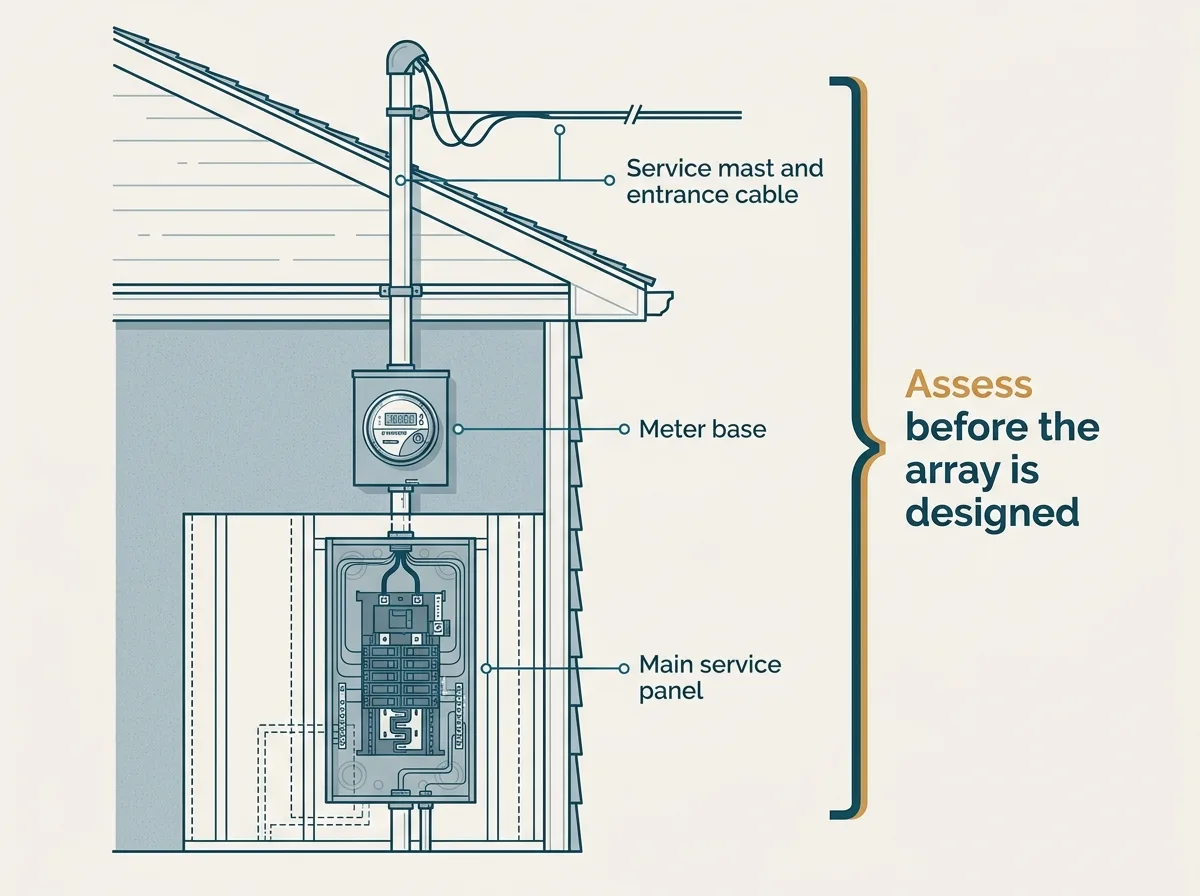
The meter base is the piece almost nobody prices in advance, because nobody looks at it until the panel work is already agreed.
Superior Power Electric puts a meter base replacement, where the existing one cannot carry 200 amp service, at $600 to $1,400 as an add-on to the job. It is not a large figure next to an array, but it arrives as a change order on a job already underway, which is the most expensive moment for any number to appear.
The fix is procedural rather than technical. Have the service assessed before the array is designed, not after the proposal is signed, and ask for the meter base to be part of that assessment. An electrician standing at the meter for ten minutes can settle Superior Power Electric's $600 to $1,400 question that otherwise settles itself later at the same price plus a second visit.
Toronto labour makes second visits expensive on their own. City Power Electrical Services puts electrician labour at $95 to $150 an hour with a service call minimum of $150 to $250, which is why a single small fix costs more than the hour it takes and why bundling work into one visit is worth planning for.
The ESA notification, and who files it
This is the part of the job that is set by law rather than by the contract.
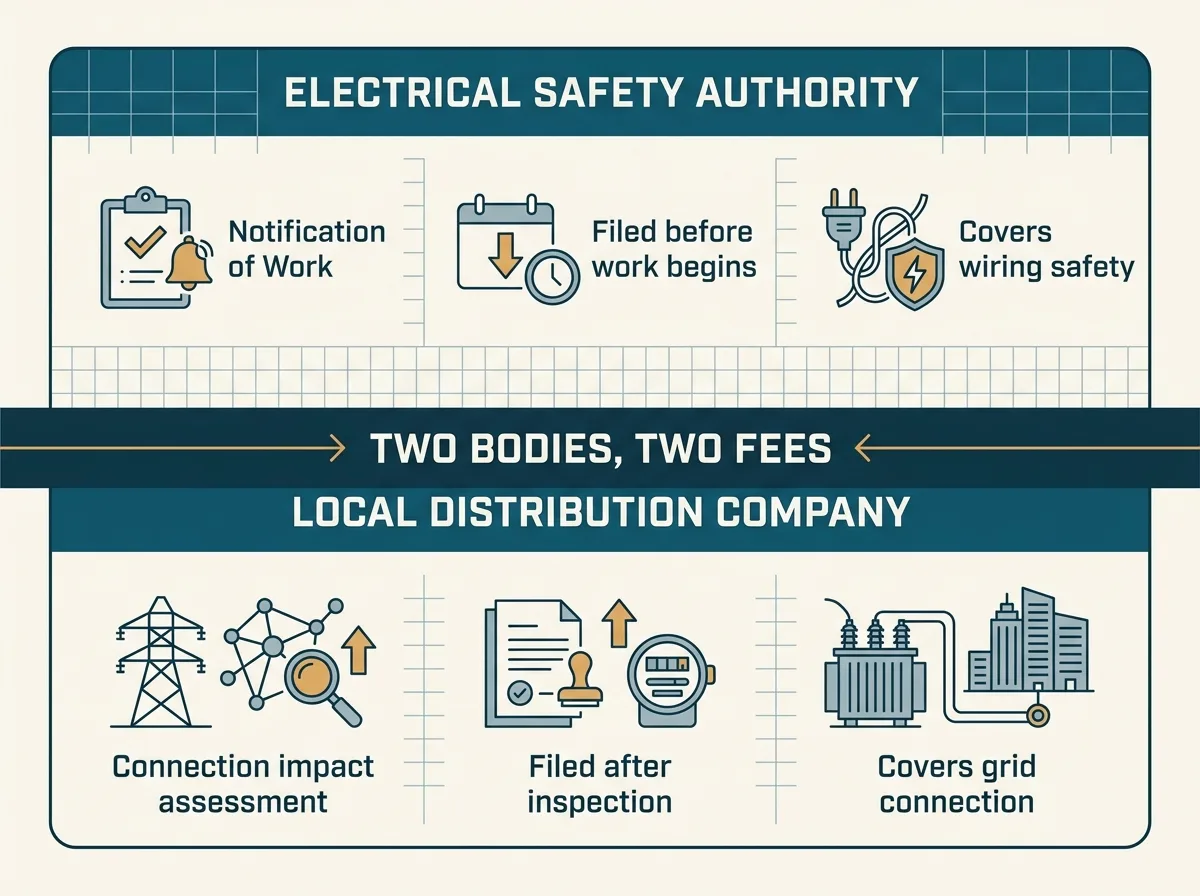
SurgePV states that every solar PV installation connected to the electrical system in Ontario needs an ESA permit, filed as a Notification of Work through esasafe.com by a licensed Electrical Contractor, before work begins. The Electrical Safety Authority puts the minimum fee for a residential notification at $88. For a residential PV system under 10 kW, SolarCalculatorHQ puts the notification at $165 plus a $95 inspection. Superior Power Electric quotes $200 to $450 for permit and inspection on general residential electrical work, which is a different scope and a different number for a reason.
SurgePV also notes that ESA wiring and licensing fees rose 1.9 percent effective 1 April 2026, so a quote written before that date understates the line slightly. It is a small amount and a useful tell about how recently a proposal was assembled.
What this site cannot tell you is which companies hold an electrical contractor licence. That information is not in any listing record here, and no page on this site asserts it about any business. Licence status is checked at its source, and the Electrical Safety Authority is that source. Our methodology page sets out what the index does and does not establish.
The utility charge is a different thing entirely
The second charge is the one that gets confused with the first, and confusing them costs a homeowner either a surprise or a double count.
SolarCalculatorHQ lists the local utility connection impact assessment at $229 with Toronto Hydro, $211 with Alectra and $306 with Hydro One for residential systems under 10 kW. That is what a distributor charges to assess connecting a generator to its grid. It is not the ESA fee, it does not replace the ESA fee, and it is charged by a different organisation for a different purpose.
SurgePV states that the net metering application goes to your local distribution company after the ESA Certificate of Inspection is in hand, using Form C at 10 kW and below and Form B above it, and that all of Ontario's roughly 60 local distribution companies are required to offer net metering. So the order is fixed: electrical notification first, inspection, then the utility.
Exported power comes back as a credit against the electricity you use rather than as a payment. What Ontario net metering actually pays you covers the mechanics, including the 12-month limit on unused credits that decides how large a system should sensibly be.
What this adds to a project, in one place
Put together, the electrical side of a residential GTA solar job carries a predictable set of lines, and their spread is wider than most homeowners expect.
The permits are the smallest and most certain part: SolarCalculatorHQ puts the ESA notification at $165 plus a $95 inspection on a system under 10 kW, and the utility connection impact assessment at $211 to $306 depending on the address. Those two are close to fixed.
The service work is where the range lives. SolarCalculatorHQ puts a service entrance upgrade at $1,800 to $4,000, and Superior Power Electric puts a full 200 amp panel upgrade at $2,800 to $5,000 with the ESA permit included and a meter base replacement at $600 to $1,400 on top of either. A house that needs all of the applicable work is carrying several thousand dollars of electrical scope before the array is priced at all.
HST applies to labour and materials at 13 percent in Ontario. On a $4,000 panel upgrade that is about $520, taking it to roughly $4,520 all in. Our solar electrical work cost guide holds every one of these figures with its source in the same sentence, and the solar panel installation cost guide sets them beside the array itself.
What to ask, and what this index can tell you
Ask whether the quoted price includes the ESA permit. Superior Power Electric states that every price on its list includes the permit and inspection, and City Power includes it in its $3,200 to $4,500 panel upgrade figure. Not every contractor does, and two quotes are not comparable until you know.
Ask for the service assessment before the design is fixed. Finding SolarCalculatorHQ's $1,800 to $4,000 service entrance upgrade mid-install is worse in every way than pricing it up front, and it is the most common reason a solar project ends up above its proposal.
Ask whether the electrical work can be bundled. City Power's service call minimum of $150 to $250 is charged per visit, so a single appointment that upgrades the panel, lands the solar circuit and adds any other dedicated circuit you were going to need avoids paying that minimum two or three times.
On the index itself, five of the 161 companies here list solar electricians as a category and 143 list panel installation, so most electrical work on a GTA solar job is bought as part of the installation rather than as a separate engagement. The solar electricians category page shows the five. This index holds no licence status, no insurance detail and no scope of work for any company on it, so treat a category label as a place to begin a conversation and confirm the credentials themselves at their source.
Frequently asked questions
Who files the ESA notification for a solar install?
- A licensed Electrical Contractor, before work begins. SurgePV states that every solar PV installation connected to the electrical system in Ontario needs an ESA permit filed as a Notification of Work through esasafe.com. The Electrical Safety Authority puts the minimum residential notification fee at $88, and SolarCalculatorHQ puts a residential system under 10 kW at $165 plus a $95 inspection.
Do I have to upgrade my electrical panel to install solar?
- Only if the existing service cannot carry the array. Where it can, SolarCalculatorHQ puts a service entrance upgrade at $1,800 to $4,000. Where it cannot, a 100 amp to 200 amp upgrade is $2,800 to $5,000 across Ontario including the ESA permit, according to Superior Power Electric, and a meter base that cannot handle 200 amp service adds another $600 to $1,400.
Is the utility connection fee the same as the ESA fee?
- No. They are separate charges from separate bodies. ESA covers the safety of the electrical work, which SolarCalculatorHQ puts at $165 plus a $95 inspection on a residential solar job under 10 kW. The connection impact assessment is what your distributor charges to assess connecting a generator to its grid, listed by SolarCalculatorHQ at $229 for Toronto Hydro, $211 for Alectra and $306 for Hydro One.
What do Toronto electricians charge?
- City Power Electrical Services puts labour at $95 to $150 an hour with a service call minimum of $150 to $250 covering the first visit. That minimum is why one small fix costs more than the time it takes, and why bundling the panel upgrade, the solar circuit and any other new circuits into a single visit saves real money.
Can this site tell me which companies are qualified?
- No. This index records the categories a company's own listing supports and holds no licence status, no insurance detail, no bonding and no scope of work for any of the 161 companies on it. Five list solar electricians and 143 list panel installation. Credentials are confirmed at their source, and for electrical work in Ontario that source is the Electrical Safety Authority.