How Long a Home Solar Battery Lasts
Last updated By The SolarPanelFinder Rooftop Desk
A lithium iron phosphate (LFP) home battery typically lasts 10 to 15 years, by the figures of Off Grid Solar System Canada, a Canadian off-grid installer directory, and the firmest promise is the maker's written warranty. Tesla's Canadian warranty covers a Powerwall for ten years and promises 80% of its capacity at the end. Enphase covers its IQ Battery 5P for 15 years or 6,000 discharged cycles, whichever comes first, with at least 60% of its capacity.
Both warranties promise a share of capacity the battery will still hold until the term ends, and the warranty's conditions decide whether you can claim on it when it fades too fast.
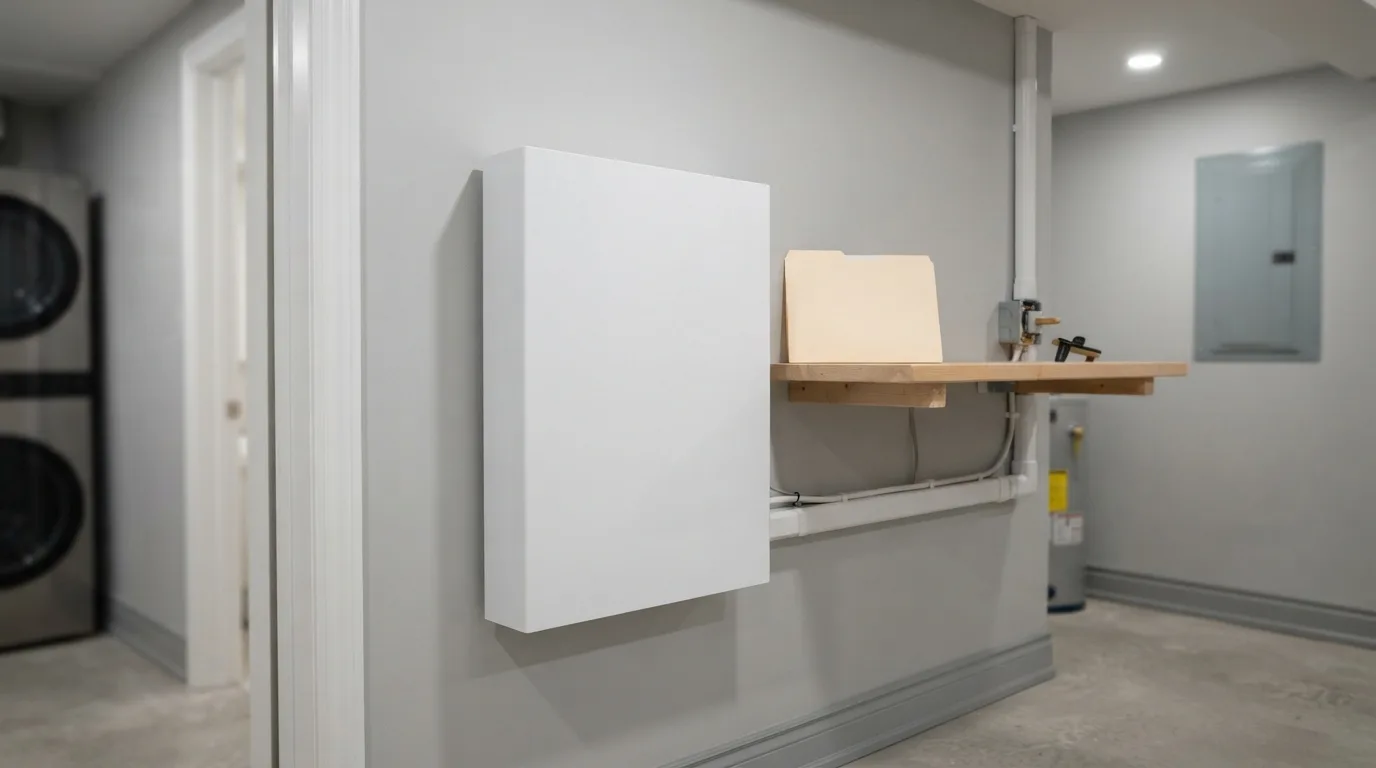
What does "lasting" mean for a battery?
It means how much energy the battery still holds, and for how long that is promised in writing. A battery slowly stores less than it did when new. That is why warranties make two separate promises. The first is that the unit will be free of defects for a set time. The second is that it will keep a stated share of its original capacity, measured in kilowatt-hours (kWh), the unit for stored energy.
A battery at 80% of its capacity still works. It runs your backup circuits for a shorter time and stores less of the day's solar for the evening.
What does Tesla promise in Canada?
Ten years against defects, and 80% of the rated capacity at ten years. Tesla's Powerwall warranty for Canada, effective 6 May 2026, covers the Powerwall 2, the Powerwall 3 and the Powerwall 3 Expansion. It says the Powerwall "will be free from defects for ten years following its initial installation date", and rates the unit at 13.5 kWh when installed.
For capacity, the warranty sets out two cases:
- Solar self-consumption or backup only. The battery keeps 80% of 13.5 kWh at ten years, with unlimited cycles.
- Any other use. The same 80% at ten years applies, but only up to 37.8 megawatt-hours of total energy through the battery.
Solar self-consumption means storing power from your own panels and using it in your home. A homeowner who uses the battery only with their own panels and for backup falls in the first case. On Tesla's figures, 80% of 13.5 kWh works out to 10.8 kWh, the least the warranty promises a Powerwall will hold at ten years.
What does Enphase promise?
A longer term with a lower floor. Enphase's warranty for the IQ Battery 5P covers the United States, Puerto Rico and Canada. It runs until the earlier of 15 years from the "Activation Date" or 6,000 discharged cycles. Until then, Enphase says the battery will keep the ability to store and discharge at least 60% of its nameplate capacity, provided it is installed and used in line with Enphase's install guide and data sheet. The warranty text counts cycles but does not define one, so ask the installer how the system reports them.
Enphase says this warranty applies to batteries activated on or after 1 December 2023, unless it posts a newer one, and tells owners to check its warranty page for the version that governs their unit.
The two products are not directly comparable. Tesla promises a shorter term, a higher floor and no cycle limit for solar and backup use. Enphase promises a longer term with a lower floor and a cycle cap. Which suits you depends on how hard the battery will work each day.
How long do different battery types last?
Off Grid Solar System Canada, a Canadian off-grid installer directory, lists a typical lifespan of 10 to 15 years for lithium iron phosphate (LFP) batteries, 3 to 7 years for AGM in daily use, 4 to 8 years for flooded lead acid that is maintained, and 4 to 7 years for gel. Those are planning figures from an off-grid cost guide, not a promise from anyone who would replace the battery.
Green Building Canada makes the same broad point without years. It says the most common battery types in solar are lithium ion and three kinds of lead acid: flooded, gel and absorbent glass mat (AGM). It says lithium-ion batteries cost more up front but last longer and need less maintenance. It names flow and sodium-ion batteries as emerging types.
The maker's warranty is the figure you can hold someone to, so ask which chemistry a quoted battery uses and ask for the warranty document with the quote.
What can cut a warranty short?
Missed conditions. Both warranties have them.
Tesla says it needs to update a Powerwall's software over the internet to honour the full ten years. If the unit is offline for a long time or is not registered, Tesla says it may not be able to honour the full term, but it will always honour at least four years from installation. The warranty covers a Powerwall bought in Canada from Tesla or from an installer in Tesla's own programme, and installed in Canada.
Section 4 of Enphase's warranty makes coverage conditional on registering the product within 45 days of first installation, although the registration card printed at the end of the same document says failing to return the card does not reduce your warranty rights. Register within 45 days anyway, so the question never comes up. It says the battery should stay connected to the internet for the whole warranty period, so faults can be diagnosed remotely and firmware updated. The warranty clock starts on the "Activation Date". For a battery, that is the earlier of the "Energize by" date printed on the packaging, or the date the battery is activated and the owner has received "permission to operate" from the authorities. Enphase also covers only batteries sold by Enphase or one of its authorized resellers.
That gives you three tasks when the battery goes in:
- Confirm the installer has registered the battery, and ask for proof.
- Keep the battery connected to your home internet.
- File the warranty document with your house papers, with the install date written on it.
What does a battery warranty not cover?
Damage from causes outside normal use, and some of the cost of a fix. Tesla's Canadian warranty excludes defects or capacity loss caused by misuse, or by installation, operation, maintenance or repair that does not follow Tesla's specifications and manuals. It excludes accidents and events such as lightning, flood, earthquake and fire, repairs by anyone other than Tesla or an installer in its programme, and moving the unit to a new location without Tesla's written consent. It does not cover normal wear and tear, superficial marks, or noise that does not affect performance. Enphase's exclusions run along the same lines and add a battery not running the latest firmware Enphase has released, where that firmware could have avoided the fault.
Labour is where the two differ. Tesla says that when it repairs or replaces a Powerwall and the work is done by an installer in its programme, the warranty reimburses that installer's reasonable labour costs under Tesla's standard policies. Enphase says its warranty does not include the labour of removing the battery or installing the repaired or replacement unit. Ask your installer, in writing, who pays for that labour if a claim succeeds.
A repair does not restart the clock. Tesla says the remainder of the original warranty period applies to a repaired or replaced unit. Enphase says the same, or 90 days from when you receive the unit, whichever is later.
What happens to the warranty when you sell the house?
It can pass to the buyer, with conditions. Tesla says a later owner who provides proof of ownership can make warranty claims. Enphase covers a new owner only if the battery stays at its original location, the new owner submits a Change of Ownership Form, and the transfer fee is paid within 30 days of the transfer. Enphase says that form is required for coverage to continue. Put the warranty document and the registration proof in the papers you hand over at closing.
How does a fading battery affect backup?
It runs your backup circuits for less time. BC Hydro, a British Columbia utility, lists battery size in kWh as one of the factors that decide how long a battery's backup lasts. A Powerwall at Tesla's ten-year floor holds 10.8 kWh rather than 13.5, so size the battery with that loss in mind. The site's guide to sizing a home battery for GTA outages walks through the circuit list and the arithmetic.
Who fits batteries in the GTA?
In this index, 16 of the 161 solar companies list battery storage. The index does not check the battery warranty any of them offers, so the questions above go to the installer, and the maker's warranty document should come with the quote. For price per kWh and what sits inside a battery quote, see the guide to comparing home battery quotes and the battery storage cost guide.
Frequently asked questions
How long does a home solar battery last?
- The firmest answer is the maker's written warranty: ten years for Tesla's Powerwall in Canada, and 15 years or 6,000 discharged cycles, whichever comes first, for Enphase's IQ Battery 5P. Off Grid Solar System Canada, a Canadian off-grid installer directory, lists 10 to 15 years as typical for lithium iron phosphate batteries. Both warranties promise a share of capacity the battery will still hold until the term ends.
What does a battery warranty actually promise?
- Usually two things: that the unit is free of defects for a set time, and that it keeps a stated share of its capacity. Tesla's Canadian warranty promises 80% of 13.5 kWh at ten years for solar and backup use. Enphase promises at least 60% of the battery's nameplate capacity until its warranty ends, if it is installed and used as Enphase's install guide and data sheet direct.
Can a battery warranty be cut short?
- Yes, if its conditions are not met. Tesla says it may not be able to honour the full ten years for a Powerwall that is offline for a long time or not registered, but that it will always honour at least four years. Enphase's warranty text conditions coverage on registration within 45 days of first installation, though its own registration card says not returning the card does not reduce your rights. Ask the installer to register the battery before the job is signed off.
Does a battery warranty transfer when I sell my house?
- Both Tesla's and Enphase's allow it, with conditions. Tesla says a later owner with proof of ownership can make a claim. Enphase covers a new owner only if the battery stays where it was installed, the new owner submits a Change of Ownership Form, and the transfer fee is paid within 30 days.
Which home batteries last the longest?
- No source this guide read ranks battery brands on lifespan. What can be compared is the written warranty: its length, the capacity promised at the end, and any cycle or energy limit. Enphase's 15-year IQ Battery 5P warranty runs longer than Tesla's ten years, but its capacity floor is lower.
Sources
- Tesla, Tesla Powerwall Warranty (Canada), effective 6 May 2026
- Enphase Energy, Limited Warranty, IQ Battery 5P (United States, Puerto Rico and Canada), effective 1 December 2023
- Green Building Canada, Solar Panels Cost in Canada (updated 14 January 2026)
- Off Grid Solar System Canada, Off-Grid Solar System Cost Canada 2026
- BC Hydro, Self-generation and outages